
Introduction:
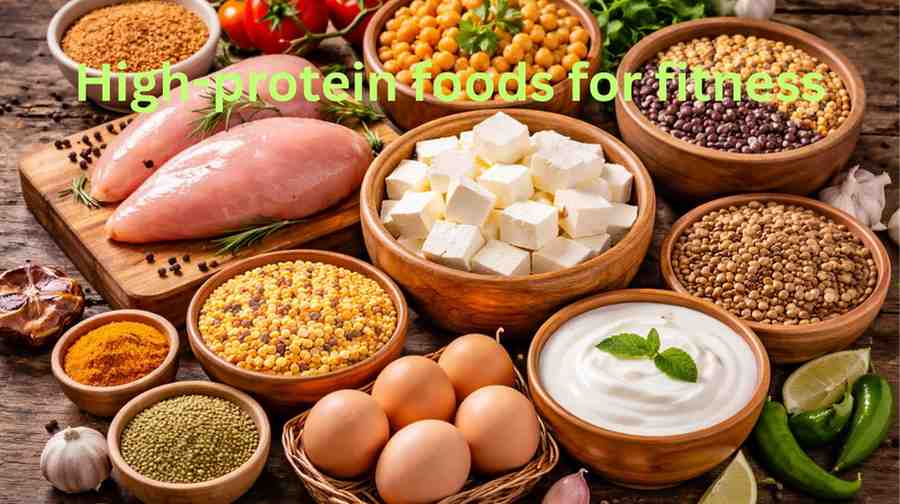
Paneer, eggs, chicken breast, lentils & dal, and Greek yogurt (hung curd) are the top 5 high-protein foods for fitness lovers in India. Seen that people are becoming more serious about their fitness nowadays. These nutritious foods are easily available at affordable prices in Indian markets. High-protein foods help you build muscle, boost strength, and support your overall health. These foods are suitable for both vegetarians and non-vegetarians. Choosing the right protein source foods can significantly enhance workout performance and resultsBottom of Form. Here, we will explore the top 5 high-protein foods for fitness lovers in India to help your workouts, support muscle growth, and achieve your fitness goals naturally.
Why are high-protein foods for fitness lovers in India essential?
High-protein foods play an important role in achieving fitness goals. Protein is essential for supporting muscle growth, repair, and recovery after workouts. Whether you do activities for weight loss, yoga, run, or high-intensity workouts, your body needs adequate protein to rebuild muscle tissue and improve strength. It is important to consume an adequate amount of protein by the fitness lovers, because traditional Indian diets are often rich in carbohydrates but comparatively low in protein. The high-protein Indian foods like paneer, eggs, dal, chicken, and yogurt help balance nutrition and support better workout performance.
How much protein does a fitness enthusiast really need?
The necessity of protein depends on body weight, activity level, and fitness goals. However, fitness enthusiasts generally need protein as follows.
Sedentary people: 0.8 g per kg of body weight.
Beginners: 1.0 -1.2 g per kg of body weight.
Regular gymgoers: 1.2 -1.6 g per kg of body weight.
Fat loss with workouts: around 1.5-2.0 g per kg to preserve muscle
Muscle gain & intense training: 1.6 -2.2 g per kg of body weight.
Top 5 high-protein foods for fitness lovers in India
The following are the 5 top high-protein foods easily available in India.
Paneer:
Paneer is the most popular protein food in India, especially among vegetarians. It is rich in casein protein, which helps to be digested slowly and supports muscle recovery over a long period of time. Paneer is also high in calcium, and it is good for bone health.
Eggs:
Eggs are the best and most affordable high-protein foods in India. They contain all essential amino acids needed for muscle growth and recovery. Eggs are easy to prepare and can be eaten boiled, scrambled, or as omelettes. They provide fats, vitamins like B12 and minerals that support overall fitness and energy levels.
Chicken breast:
Chicken breast is a lean and low-fat protein source in India. It contains around 22-24 g of protein per 100 g with little fat. It supports muscle gain and fat loss due to high protein content and minimal calories. It is easily digestible and keeps you full for a long time. You can take it by boiling, grilling, or roasting for a healthy and protein-rich meal.
Lentils and dal:
Lentils and dals are traditional high-protein foods in India. They contain protein, minerals, and fiber, which help digestion and provide sustained energy. When combined with rice or roti, they provide a complete source of amino acids.
Yogurt:
Greek yogurt or hung curd is a popular high-protein dairy food in India. It contains around 10 g of protein per 100 g. It supports muscle recovery, digestion, and gut health due to its probiotics and protein content. Yogurt is rich in calcium, and you can eat it plain, with fruits, or as part of smoothies.
Comparison of the protein content of popular Indian foods
Here, we provide a comparison list of some popular Indian foods in terms of protein content.
| Food Item | Serving Size | Protein Content (Approx.) |
|---|---|---|
| Paneer (Cottage Cheese) | 100 g | 18–20 g |
| Eggs (Whole) | 1 large egg | 6–7 g |
| Chicken Breast (Cooked) | 100 g | 30–32 g |
| Fish (Rohu/Salmon) | 100 g | 20–25 g |
| Greek Yogurt (Hung Curd) | 100 g | 9–10 g |
| Milk (Cow) | 1 glass (250 ml) | 8 g |
| Dal (Cooked Lentils) | 1 cup | 15–18 g |
| Chickpeas (Chana, Boiled) | 1 cup | 14–15 g |
| Soybeans (Cooked) | 100 g | 16–18 g |
| Almonds | 28 g | 6 g |
| Peanuts | 28 g | 7–8 g |
| Tofu | 100 g | 10–12 g |
Best ways to include high-protein foods for fitness in your daily Indian diet
The following are the best ways to include high-protein foods in your daily diet routine.
Start your day with a protein-rich breakfast:
Add protein to your breakfast to stay full and energised. Boiled eggs, paneer bhurji, moong dal chilla, Greek yogurt, etc. to be included. A protein-rich breakfast helps control hunger and supports muscle health.
Choose high-protein snacks instead of fried foods:
Take healthier snacks like boiled eggs, yogurt, peanuts, roasted chana, cottage cheese cubes, or protein-rich smoothies instead of fried foods. These foods keep you full and prevent overeating.
Add protein to every meal:
Make sure that you meal include alt least one protein source. Dal, paneer, rajma, chicken, fish, or tofu along with rice or roti should be included in your meal. This balances your meal and improves overall nutrition.
Combine protein with carbs:
Combine dal with rice, paneer with roti, paratha with curd to ensure a complete amino acid profile and absorption in vegetarian diets.
Include dairy daily:
Paneer, milk, curd, and buttermilk are sources to increase daily protein intake. If your goal is to lose weight, choose low-fat meals.
Choose protein for vegetarians:
Dal, paneer, nuts, seeds, soy chunks, and sprouts are suitable for vegetarians. You may rotate these daily to get a variety of amino acids.
Use protein supplements if needed:
If you see that food alone does not meet your needs, add whey protein after workouts or as a snack. This is suitable for people with a busy schedule or with higher fitness goals.
Cook smart:
Cook your meal with less oil. Use healthy cooking methods like boiling, grilling, steaming, etc. This keeps protein foods nutritious and calorie-controlled.
Which is better for fitness? Vegetarian or Non-vegetarian Protein Sources
Both vegetarian and non-vegetarian protein sources depend on dietary preference, fitness goals, availability, and budget. They can meet daily protein requirements when planned properly.
Vegetarian protein sources:
The following are the common vegetarian high-protein foods in India.
- Paneer (cottage cheese).
- Dal and lentils.
- Tofu, soybeans, and soy chunks.
- Rajma, chole, and chickpeas.
- Milk, curd, and Greek yogurt.
- Nuts and seeds (almonds, peanuts, chia).
Vegetarian is best for:
Fat loss, digestion, heart health, and general fitness.
Vegetarian protein has some pros and cons.
Pros:
- Rich in fiber, vitamins, and minerals.
- Supports gut health and heart health.
- They are easily available and affordable in India.
- Suitable for vegetarians.
Cons:
- Low protein density compared to animal sources.
- Some plant proteins are incomplete, i.e., lack certain amino acids.
- It requires a food combination, e.g., dal with rice.
Non-Vegetarian protein sources:
The Popular non-vegetarian protein options are as follows.
- Eggs
- Fish
- Chicken breast
- Lean mutton
Non-vegetarian is best for:
Muscle gain, bodybuilding, and strength training.
Pros:
- These are complete proteins with all essential amino acids.
- Higher protein content per serving.
- Ideal for muscle building and strength training.
- Faster muscle recovery.
Cons:
- Excessive intake of fatty meats may increase calories and fat consumption.
- This is expensive compared to vegetarian proteins.
- Not suitable for vegetarians.
Which is better for fitness?
By observing the following, you will be able to choose which protein sources are better for fitness.
- For muscle gain and strength: Non-vegetarian sources.
- For fat loss and long-term health: Vegetarian sources.
- Best option for most people: Balanced diet (Veg + eggs / dairy or lean meat)
- Note that fitness depends more on protein intake, calories, training, and consistency than on veg or non-veg.
Common protein myths among Indian fitness enthusiasts
There are some common myths among Indian fitness enthusiasts. Here are the myths.
- Protein is only for bodybuilders.
- More protein means faster muscle growth.
- Protein supplements are mandatory for fitness.
- Indian vegetarian diets cannot provide enough protein.
- High-protein diets damage the kidneys.
- Carbohydrates are not good when taking high protein.
- Protein should be consumed only after workouts.
Conclusion
Protein is essential for people who are serious about muscle growth, fat loss, fitness, or improving overall health. High-protein foods in India, like eggs, paneer, chicken, dal, and yogurts, are affordable and easily available in the market. They help to meet daily protein requirements and support muscle growth, fat loss, and overall health in your fitness journey. Start today, these top 5 high-protein foods in India to enhance your workouts and transform your health.
FAQ
Q1: What are the best high-protein foods for fitness in India?
Ans: The best high-protein foods for fitness lovers in India include eggs, paneer, chicken breast, dal, and Greek yogurt. These foods are affordable and easily available. They support muscle growth and recovery.
Q2: Which Indian vegetarian foods are high in protein?
Ans: In India, high-protein vegetarian foods include paneer, lentils, rajma, chickpeas, tofu, yogurt, and soybeans.
Q3: How many eggs should a fitness lover eat per day?
Ans: 2-6 eggs per day is considered safe and beneficial.
Q4: Are high-protein Indian foods good for weight loss?
Ans: Yes, high-protein Indian foods help in weight loss by increasing satiety, boosting metabolism, and preserving lean muscle mass during calorie deficits.
Q5: What is the cheapest high-protein food in India?
Ans: The cheapest high-protein foods in India include eggs, lentils (dal), chickpeas, peanuts, andmilk, making them ideal for budget-friendly fitness diets.